
Moats Washhouse
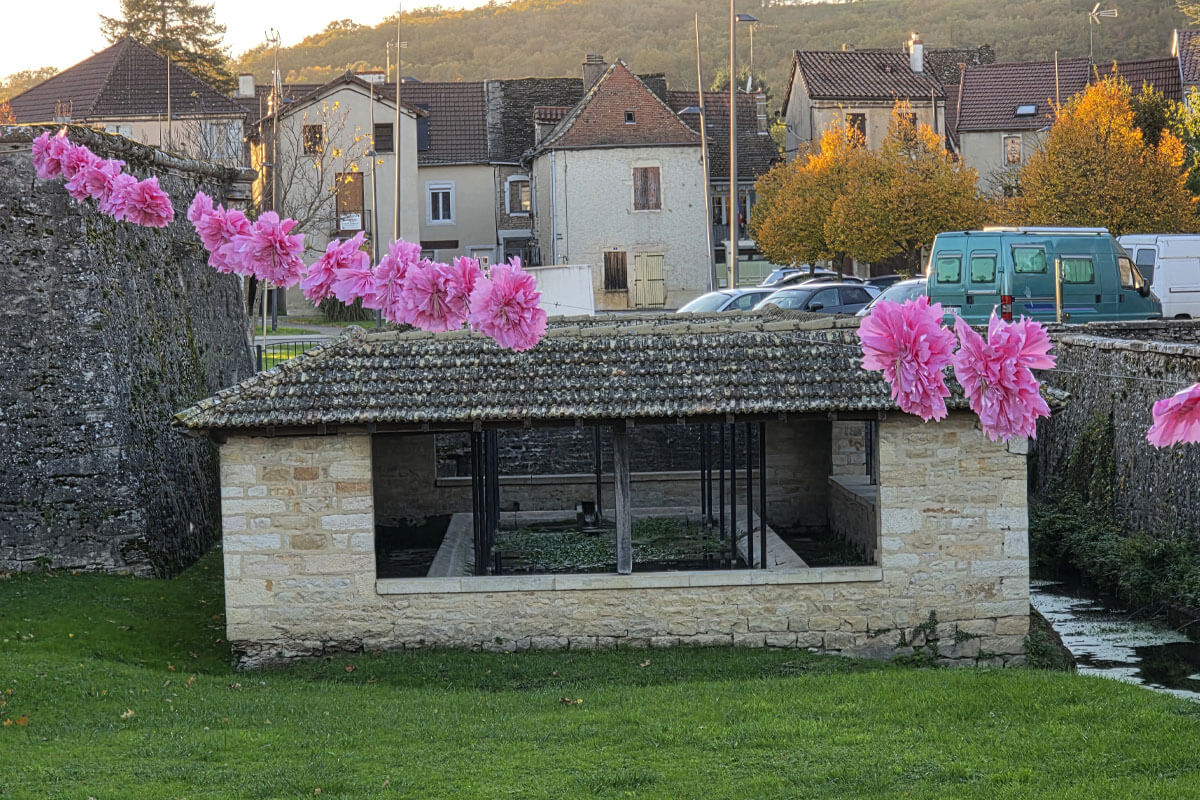
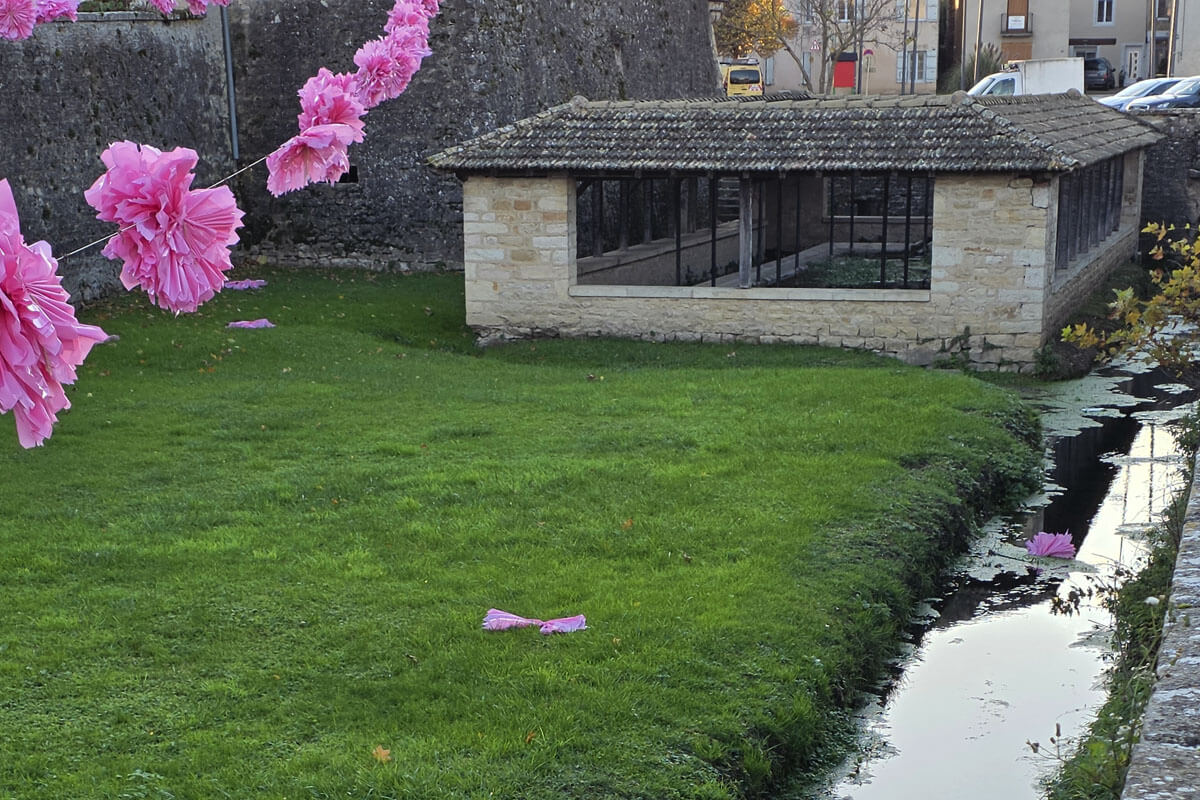
Moats Washhouse is a small washhouse built inside the former château’s moats, accessed by a stone staircase. Originally open-air, it later received a simple wooden-post roof.
Moats Washhouse is a distinctive washhouse positioned in the moats below the old château of Sennecey-le-Grand. Reached by a descending staircase, it was originally an open-air washing area before being upgraded with a lightweight gallery roof supported by wooden posts. Its stone-slab floor and simple construction reflect its functional purpose, serving the community by making use of the moat’s water system. Though modest in scale, this lavoir forms an important part of the town’s small built heritage, illustrating how defensive structures were adapted for everyday life.
Gallery of Moats Washhouse
Geographical location of Moats Washhouse
Sens Washhouse
Sens Washhouse is a semi-buried communal washhouse at the heart of the hamlet of Sens. Once a shared social space where villagers washed laundry and exchanged news.
Town Hall Pump
Town Hall Pump is a late-19th-century cast-iron manual water pump placed beside the town hall. Once vital for daily water needs, it now serves as a charming heritage feature decorated with flowers in its stone basin.
Palette Fountain
Palette Fountain is a circular stone fountain house covered by a traditional Burgundian stone dome topped with a carved finial. Its protected opening, framed with cut stone and ironwork, once provided clean water to the Palette district of Sennecey-le-Grand.